
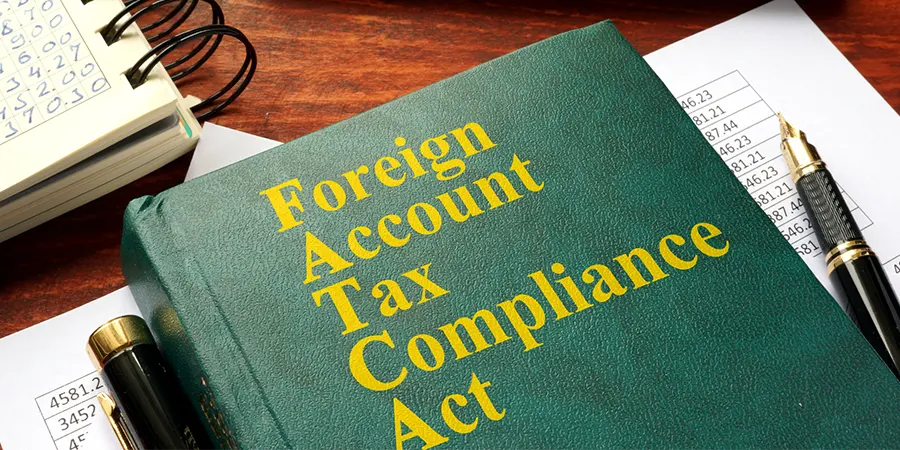
If you are an American living overseas, you have probably heard the word FATCA. Perhaps your bank mentioned it when you opened an account, or worse, when they declined to open one. Either way, it is a law that follows Americans wherever they go, and understanding it can save you a great deal of stress.
Here is what FATCA actually means for your day-to-day financial life abroad.
What FATCA is, in plain English
FATCA stands for the Foreign Account Tax Compliance Act. It was introduced in 2010 to help the IRS track money held by Americans outside the United States.
It works in two directions. Foreign banks and investment firms must report their American customers to the IRS. And Americans abroad must report their foreign financial accounts and assets to the IRS themselves, once those assets pass certain thresholds.
In other words, the IRS hears about your finances from two sources: your bank and you. If those two stories do not match, questions follow.
Why your bank cares that you are American
This is the part most expats feel first. Because FATCA puts reporting obligations and penalties on foreign banks, some institutions decide that American customers are simply not worth the paperwork.
That can mean being turned away when you try to open a local bank account, having an existing account closed, or being refused access to investment platforms and pension products that everyone around you can use freely.
It is frustrating, and it is not personal. It is banks managing their own compliance risk. The good news is that plenty of institutions and advisers do work with Americans abroad. You just need to know where to look.
What you need to report
There are two separate reporting requirements, and they are often confused.
The first is Form 8938, which is filed with your US tax return under FATCA. You must file it if your foreign financial assets exceed certain thresholds. For Americans living abroad, those thresholds are higher than for those in the US, starting at 200,000 dollars for a single filer at year end.
The second is the FBAR, a separate report filed with the Treasury Department. This applies if the combined value of your foreign accounts exceeds 10,000 dollars at any point in the year. That is a low bar, and it catches almost every expat with a local current account and some savings.
Many Americans abroad need to file both. Missing them can lead to significant penalties, even when no tax is actually owed
The hidden trap: foreign investments
FATCA sits alongside another issue that catches Americans abroad off guard. Many ordinary local investments, such as European investment funds or certain savings products, are treated by the IRS as PFICs, a category with punishing tax treatment and complex reporting.
A fund that is perfectly sensible for your non-American neighbour can be a genuine problem for you. This is why Americans abroad often need a different investment approach entirely, built around US-friendly structures.
A quick recap
- FATCA requires foreign banks to report American customers to the IRS
- You may need to file Form 8938 with your tax return if your foreign assets pass the thresholds
- The FBAR is a separate report, triggered once your foreign accounts total more than 10,000 dollars
- Some banks and platforms restrict American customers, but expat-friendly options exist
- Many common foreign investments are tax traps for Americans, so structure matters
Compliance is manageable with the right guidance
FATCA is not designed to punish ordinary Americans living abroad. Most expats owe little or no US tax once foreign tax credits and exclusions are applied. The real risk is not the tax itself, but the reporting: forms missed, accounts unreported, or investments held in the wrong structure.
With the right setup, staying compliant becomes routine, and you can invest and plan for retirement with confidence rather than worry.
We specialise in cross-border planning for Americans abroad and understand FATCA from both sides of the Atlantic. If you would like clarity on your reporting obligations or your investment options, book an obligation-free call with one of our advisers. No jargon, no pressure, just clear answers.